Blog
Why Cheap Leather Tool Bags Fail Under Real Load


Cheap leather tool bags often fail quickly under heavy jobsite conditions because they use weaker leather, poor stitching, and minimal reinforcement. Professional tradesmen carry heavy tools daily, placing constant stress on straps, seams, and weight-bearing areas.
Many low-cost leather tool bags are manufactured using split leather, weak stitching, and minimal reinforcement. While these bags may appear attractive at first, they often begin showing cracks, stretched seams, sagging bottoms, and torn straps much sooner than expected.
Construction workers, framers, electricians, roofers, and carpenters put constant stress on their tool gear. Repeated lifting, bending, dragging, and weight concentration expose weak construction areas quickly. Understanding why cheap leather bags fail helps professionals choose equipment that delivers long-term durability, comfort, and reliability on the jobsite.
The difference usually comes down to material quality, stitching strength, reinforcement placement, and load distribution design. Full grain leather and reinforced stress points are critical for tool bags that must survive demanding daily workloads without losing structure or performance.
Weight and Load Distribution
Cheap leather tool bags often use thin hides or split leather that simply can’t handle heavy tools. Overloading these bags puts pressure on:
- Bottom panels: Thin leather stretches and sag
- Side seams: Weak stitching tears when bags bulge
- Straps: Narrow or poorly reinforced straps dig in and may snap
Full grain leather, by contrast, maintains its shape and resists stretching under weight, making it ideal for daily use with tools, equipment, and hardware.
Stress Points That Break Leather Bags
Even thick leather can fail if stress points aren’t properly designed. Common stress points include:
- Corners and edges where tools rub
- Bottom joints where weight is concentrated
- Strap attachments and loops
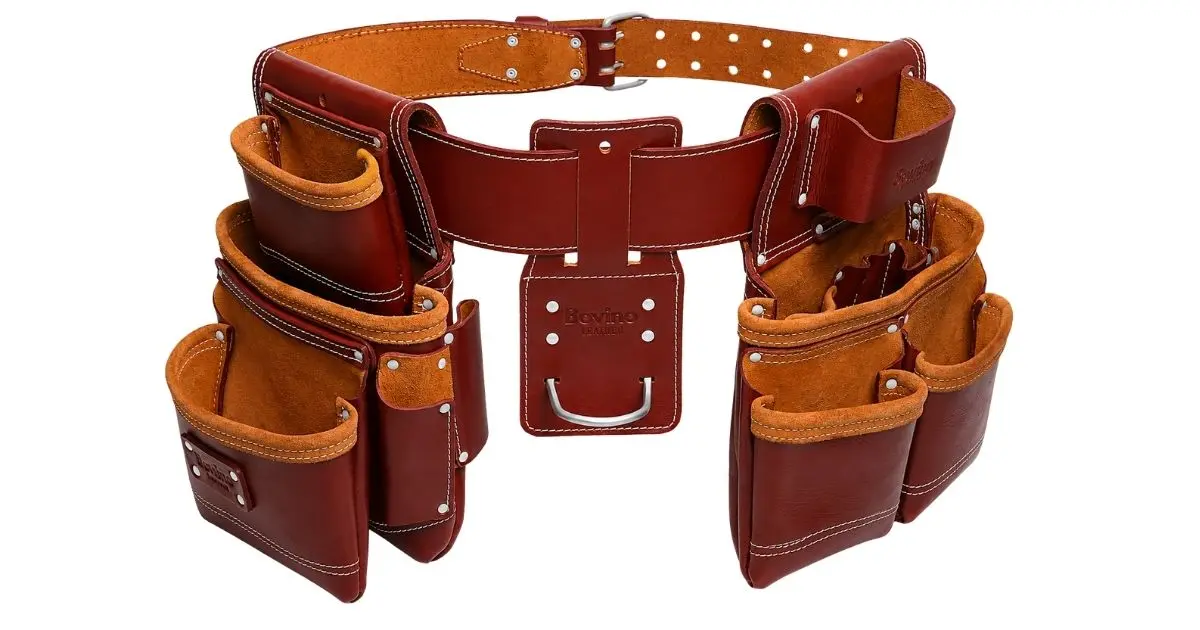
Cheap leather tool bags often have reinforcements missing or weak, causing tearing over time. High-quality bags, like those from Bovino Leather , place extra stitching and leather reinforcement exactly where stress accumulates.
Stitching Pressure and Longevity
One of the most overlooked factors in leather durability is stitching:
- Single-line stitching is common in low-cost bags, leading to seam splitting
- Cheap thread can fray or break under repeated stress
- Bags without reinforced stitching at high-stress areas often fail within months
Unlike cheap leather tool bags, Bovino Leather bags use reinforced saddle stitching and premium heavy-duty thread designed to withstand loaded tools, harsh jobsite conditions, and daily professional use without splitting or tearing.
How Full Grain Leather Solves These Problems
Full grain leather naturally resists tearing and stretching because it keeps the hide intact. It also:
- Ages gracefully, forming patina instead of cracking
- Supports heavy weight without losing structure
- Works well with reinforced stitching for maximum longevity
This makes full grain leather the superior choice for tool bags that are used every day under real jobsite conditions.
Split Leather vs Full Grain Leather
Many cheap leather tool bags are manufactured using split leather because it lowers production costs. While split leather may look similar at first glance, it lacks the natural fiber strength and durability found in full grain leather. Under heavy jobsite use, split leather often begins cracking, stretching, and weakening much faster.
Cheap leather tool bags that often weaken, sag, and crack under pressure, full grain leather retains the strongest outer layer of the hide, making it far more resistant to tearing, stress damage, and heavy daily use. It also ages better over time by developing a natural patina instead of peeling or deteriorating. For professionals who carry loaded tools every day, full grain leather delivers superior long-term durability, comfort, and reliability on demanding jobsites.
Tips for Choosing a Leather Tool Bag That Lasts
- Look for full grain leather only
- Check the stitching type and reinforcement at corners, bottoms, and straps
- Avoid overly thin leather or cheap split leather
- Consider strap width and padding for weight distribution
- Choose bags with reinforced stress points for tool-heavy jobs
Gentle Takeaway
Cheap leather tool bags fail because they combine weak leather with poor construction. Full grain leather, reinforced stress points, and quality stitching prevent cracking, tearing, and sagging, ensuring your bag performs for years.
If you’re looking for tool bags, pouches, and leather accessories that can handle daily loads, Explore Bovino Leather’s heavy-duty tool belts, leather tool pouches, suspenders, and professional tool rigs designed for framers, carpenters, electricians, and construction professionals. Professional tradesmen should avoid cheap leather tool bags because weak materials and poor stitching reduce durability and jobsite performance.
Proper tool organization and load management also improve workplace safety, especially on active construction jobsites.