


Blog
The Ultimate Guide to Leather Tool Belt

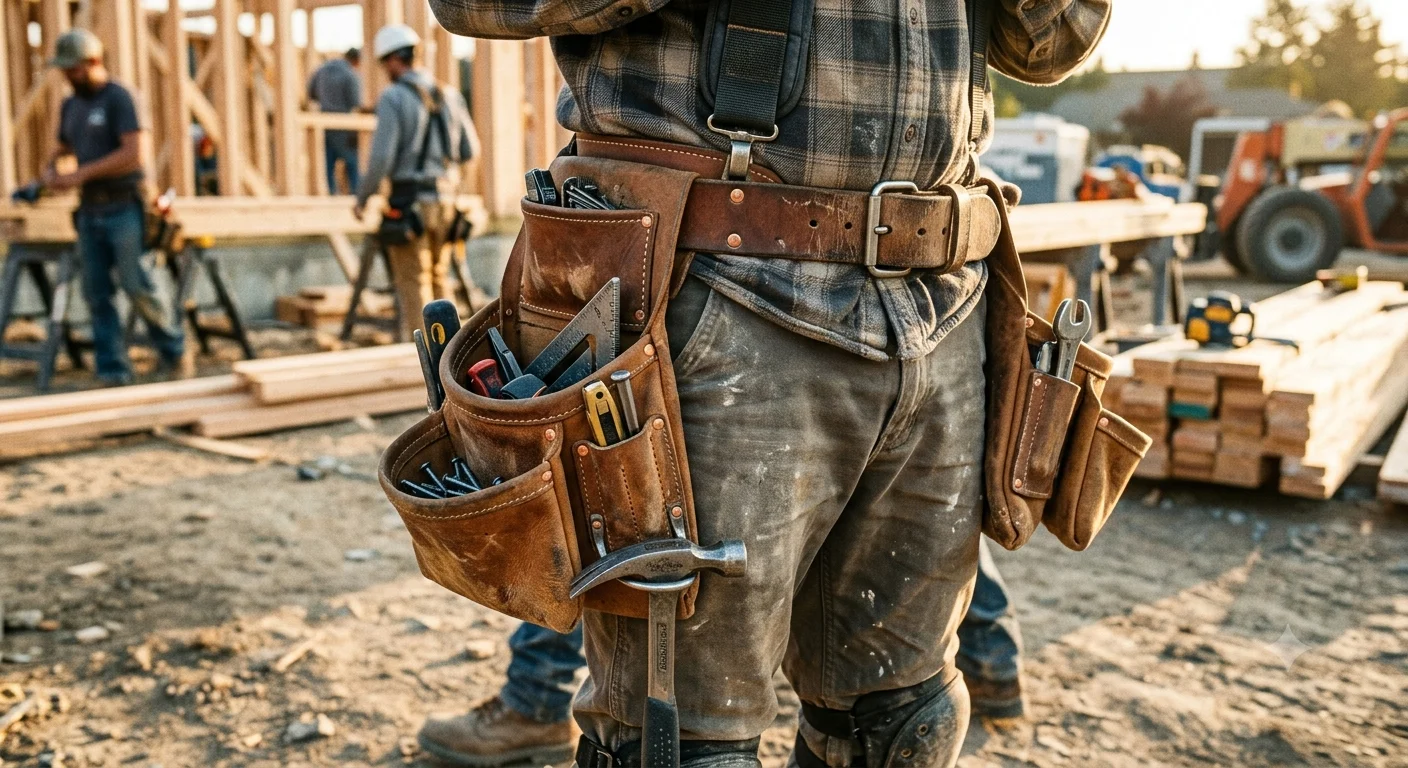
A leather tool belt is one of the few pieces of gear a tradesperson puts on every single day, for years, without thinking twice about it until it fails. Get the right one, and it disappears onto your hip and does its job. Get the wrong one, and you feel it in your back, your shoulders, and your patience by 2 p.m. every afternoon.
This guide covers everything you need to know before buying one: what a leather tool belt actually is, how it’s built, what separates a good one from a bad one, how to size and load it correctly, and how to choose between the different styles and trade-specific setups on the market. Think of this as the one page you need before making the decision – every narrower question (leather vs. nylon, best belt for framers, suspenders, materials) links out to a deeper guide below.
What Is a Leather Tool Belt?
A leather tool belt is a wearable rig typically one or two pouches mounted on a belt, sometimes paired with suspenders — built to carry hand tools, fasteners, and small hardware within arm’s reach on a job site. Unlike a tool bag you set down and open, a tool belt stays on your body all day, which is exactly why material, fit, and construction matter more here than almost any other piece of trade gear.
Leather has been the standard material for tool belts for generations, for a simple reason: it holds its shape under load, breaks in to fit the wearer, and survives the kind of daily abuse — dropped tools, sharp edges, constant flexing that wears out lighter materials in a season or two. If you want the deeper material breakdown, we cover exactly what separates real durability from marketing language in our Full Grain Leather Guide worth reading before you buy anything described as “genuine” or “premium” leather.
Leather Tool Belt vs. Other Options
Leather isn’t the only material tool belts are made from, and it isn’t automatically the right choice for everyone. Nylon and synthetic-blend belts are lighter out of the box, dry faster in wet conditions, and cost less upfront which makes them a reasonable option for light-duty work, occasional use, or trades that don’t carry heavy tools all day.
For a full side-by-side breakdown durability, comfort, weather resistance, tool capacity, and long-term cost see our dedicated comparison: Leather Tool Belt vs. Nylon Tool Belt. The short version: if you’re working full-time and loading real weight daily, leather earns its higher upfront cost back in years of service. If you’re doing occasional light work, a nylon setup is a legitimate choice.
What Makes a Leather Tool Belt Well-Built
Not every leather tool belt on the market is built the same way, and price alone isn’t a reliable signal. Here’s what actually separates a belt that lasts a decade from one that fails in a season.
Leather grade. Full grain leather uses the outermost, densest layer of the hide and holds up to years of flexing and load-bearing. Lower grades top grain, “genuine,” or bonded leather — look similar on a shelf but wear out significantly faster under daily mechanical stress. This is the single biggest factor in long-term durability, and it’s worth understanding before you buy see the Full Grain Leather Guide for how to tell the difference.
Stitching and rivets. Look for reinforced, doubled stitching at stress points — pouch bottoms, strap attachments, tool loops — and metal rivets rather than stitching alone at the highest-load points. This is usually where a cheap belt fails first, often within months. Thread quality matters as much as leather quality; waxed, heavy-gauge thread resists abrasion far better than standard stitching.
Pouch structure. A well-built leather pouch holds its shape and stays open when empty, so you can find and grab a tool without fumbling. Structure comes from the leather thickness and how the pouch is cut and assembled thin leather or poor construction collapses even on a full grain belt.
Belt width and thickness. A wider, thicker main belt (usually 2.5″–3″+) distributes weight across your hips rather than digging into one spot. Thin belts concentrate load and cause discomfort faster, regardless of how good the leather itself is.
Hardware. Buckles, D-rings, and snaps should be solid metal, not plated or coated pieces that will corrode or crack. This is a small detail that’s easy to overlook in photos but shows up fast in daily use.
How to Choose the Right Leather Tool Belt for Your Trade
The “right” tool belt depends heavily on what you do and how much you carry. A framer loading hammers, nail guns, and speed squares needs a very different setup than an electrician carrying wire strippers and small connectors.
Framers and carpenters typically need the highest capacity and heaviest-duty construction multiple pouches, hammer loops, and a wide belt or suspender system to carry the load without back strain. We break this down in detail in How to Choose a Framer Leather Tool Belt, covering pouch configuration, capacity, and what heavy daily use demands from the leather itself.
Electricians and finish trades often do better with a lighter, more compact setup fewer, smaller pouches sized for wire nuts, strippers, and small hand tools rather than framing hammers and fasteners. Bulk here works against you; a belt built for a framer will feel oversized and awkward for finish work.
General contractors and maintenance trades usually land in the middle a mid-capacity belt with a flexible pouch layout that can handle a mixed toolkit without being purpose-built for one trade.
If you’re not sure which category you fall into, ask yourself two questions: how many distinct tools do you need within arm’s reach at once, and how many pounds of tools and fasteners are you realistically carrying by mid-morning? That answer points you toward capacity before anything else.
Sizing and Fit
A leather tool belt that doesn’t fit right will cause discomfort no matter how good the leather is. A few sizing basics:
- Measure over work pants, not bare waist — tool belts are worn over your regular clothing, and sizing to your bare waist measurement will leave the belt too tight once you’re dressed for the job.
- Leave room for movement. The belt should sit comfortably on your hips without digging in when you bend, crouch, or reach — too tight restricts motion and causes fatigue faster than a slightly looser fit.
- Consider suspenders once total tool weight climbs. A belt alone concentrates all that weight on your waist and lower back. Once you’re consistently carrying 15+ pounds of tools, distributing that load across your shoulders makes a measurable difference over an 8–10 hour day. We cover sizing, weight distribution, and setup in our dedicated suspenders guide (coming soon) — for now, know that pairing a quality belt with suspenders is standard practice for full-time framers and carpenters carrying real weight.
Capacity and Pouch Configuration
How much a belt can hold — and how that capacity is organized — matters as much as raw size.
- Fixed vs. modular pouches: Leather tool belts typically use fixed, structured pouches that stay in position and hold their shape. This trades some flexibility for consistency — you always know where a tool lives, and the pouch doesn’t collapse when it’s empty.
- Single-pouch vs. two-pouch (framer-style) setups: A single pouch works fine for lighter trades or occasional use. Two-pouch, suspender-supported rigs are standard for framing and heavy carpentry, splitting weight across both hips instead of one side.
- Dedicated tool loops: Hammer loops, tape clips, and fastener pockets keep frequently used items instantly accessible rather than buried in a general pouch. If you reach for the same three or four tools constantly, dedicated loops save real time over a full day.
Durability and Long-Term Value
This is where leather’s higher upfront cost gets justified — or doesn’t, depending on how you use it.
A well-made full grain leather tool belt, maintained with basic care, commonly lasts a decade or more of daily professional use. Compare that to lower-grade leather or synthetic alternatives, which are frequently replaced every one to three years under the same conditions, and the cost-per-year math tends to favor leather for anyone working full-time. Our full leather vs. nylon comparison walks through this trade-off in more detail if you’re weighing materials specifically.
The durability isn’t just about the leather itself — it’s the combination of leather grade, construction quality, and basic maintenance. Skipping any one of the three shortens the lifespan of even a full grain belt. We’ve also written about what happens when the underlying construction is cut to hit a lower price point in Why Cheap Leather Tool Bags Fail — the same failure points apply directly to tool belts and pouches.
Caring for a Leather Tool Belt
Basic maintenance extends the life of a leather tool belt significantly, and none of it is complicated:
- Wipe down dirt and dust with a dry or slightly damp cloth after heavy use.
- Condition periodically — every few months for daily use, more often in dry climates — to replace oils lost to sun and handling and prevent cracking.
- Avoid prolonged water exposure. Oil-tanned leather resists moisture reasonably well, but it isn’t waterproof; wipe off water promptly and let it air dry away from direct heat.
- Let it break in. A new leather belt will feel stiffer than it will after a few months of daily wear. This is normal, not a sign of poor quality — it’s part of how leather molds to how you actually work.
Common Mistakes When Buying a Leather Tool Belt
- Buying on price alone. A cheap “leather” belt is often a lower grade that won’t survive daily heavy use — see our breakdown of how leather grades actually differ in the Full Grain Leather Guide.
- Ignoring your actual workload. A heavy-duty framer setup is overkill — and uncomfortable — for light or occasional work, and a light belt won’t hold up to daily framing.
- Skipping suspenders when weight demands them. Waist-only support for 15+ pounds of daily tool weight is a common cause of lower back fatigue among tradespeople.
- Not budgeting for maintenance. Leather isn’t maintenance-free; skipping basic care shortens the lifespan you’re paying extra for.
Frequently Asked Questions
Is a leather tool belt worth the extra cost over nylon? For full-time tradespeople carrying real tool weight daily, yes — leather typically lasts significantly longer, which lowers the effective cost per year despite a higher upfront price. For light or occasional use, a nylon belt is a reasonable, lower-cost option.
How long does a leather tool belt last? With basic care, a well-made full grain leather tool belt commonly lasts a decade or more under daily professional use.
What size tool belt do I need? Measure over your work pants, not your bare waist, and prioritize enough room to move freely when bending or crouching. Total tool weight — not waist size alone — should also guide whether you need a single pouch, a two-pouch framer-style setup, or added suspenders.
Do I need suspenders with a tool belt? If you’re consistently carrying more than about 15 pounds of tools, suspenders meaningfully reduce lower back strain by shifting some of that load to your shoulders. Lighter setups can usually go beltonly.
What’s the difference between a framer’s tool belt and a general tool belt? Framer-style belts are built for higher capacity and heavier daily loads — typically two pouches, hammer loops, and suspender support. General-purpose belts are lighter and more compact, better suited to finish work or mixed toolkits. See our full breakdown in How to Choose a Framer Leather Tool Belt.
How do I know if a tool belt is real full grain leather? Look for natural surface variation rather than a perfectly uniform pattern, a firm and dense hand-feel rather than a plasticky one, and specific sourcing details from the brand rather than vague terms like “premium leather.” Full details in our Full Grain Leather Guide.
Final Thoughts
A leather tool belt is a long-term investment in comfort and durability, not just another piece of gear to check off a list. The right choice depends on your trade, your daily tool load, and how long you expect the gear to last but for full-time professionals carrying real weight, a well-built full grain leather belt consistently outperforms the alternatives over the life of the product.
Browse our full range of leather tool belts built from oil-tanned full grain buffalo leather, or dig into the specific guides linked throughout this page for framer setups, material grades, and leather vs. nylon comparisons.
